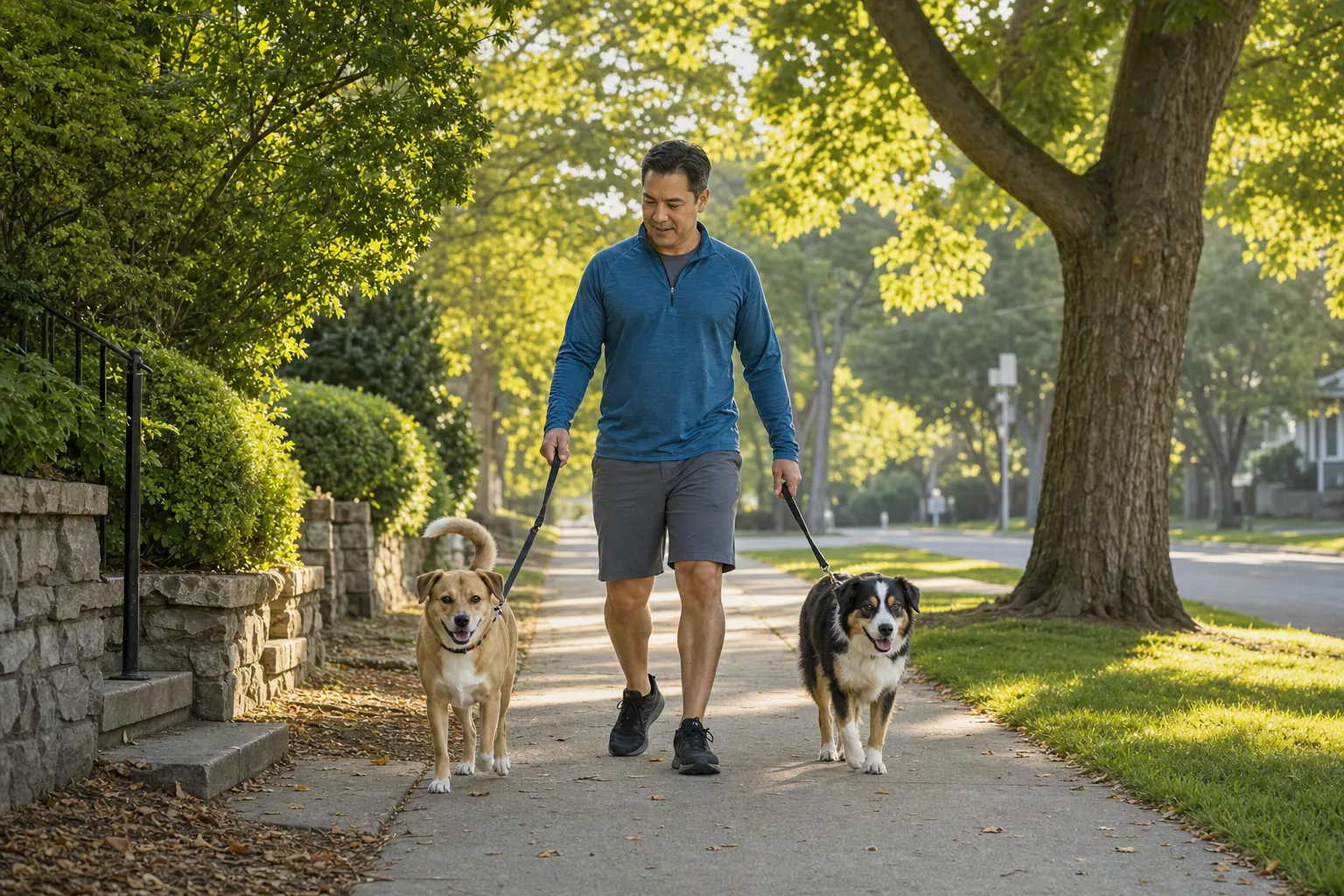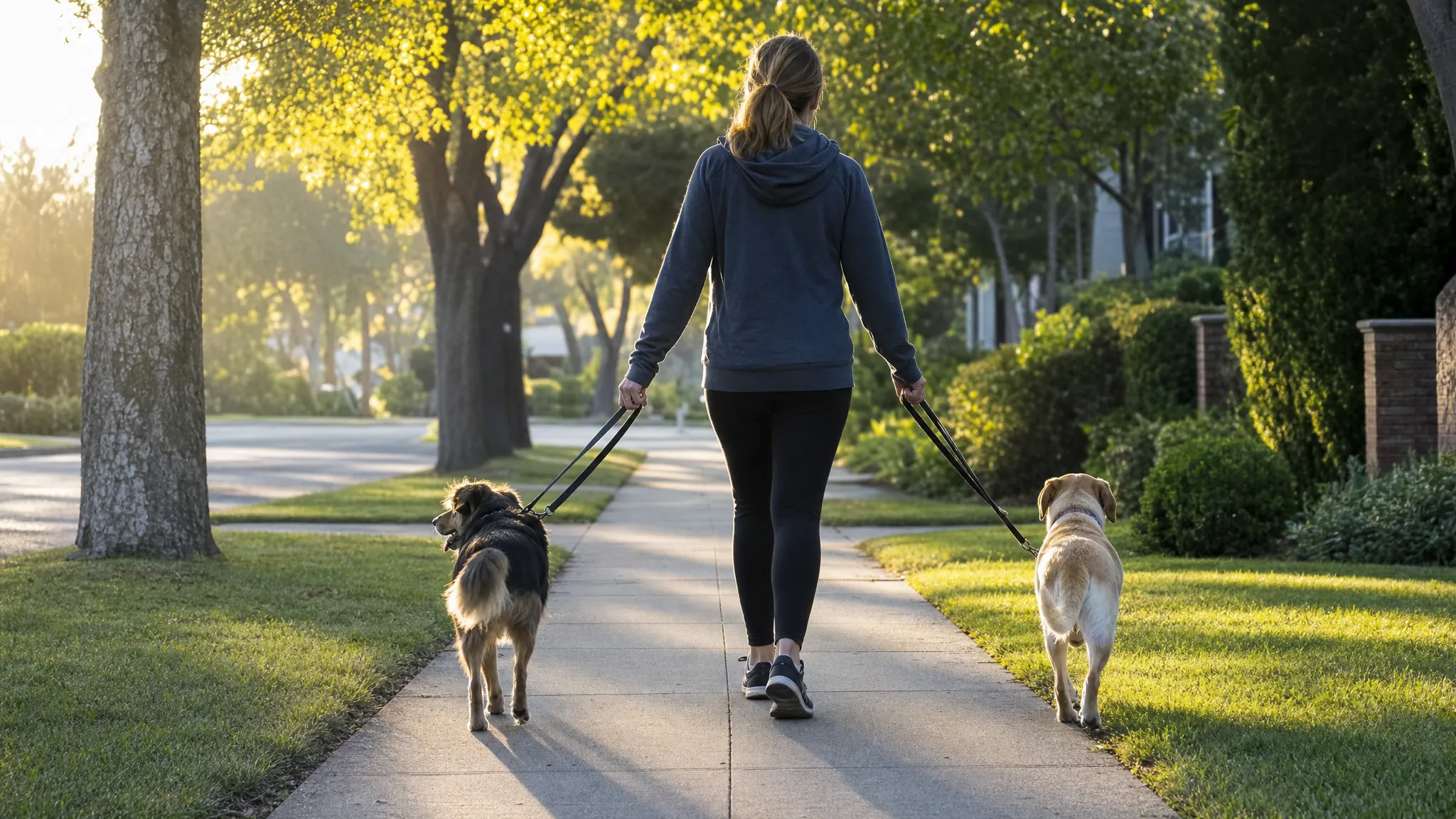
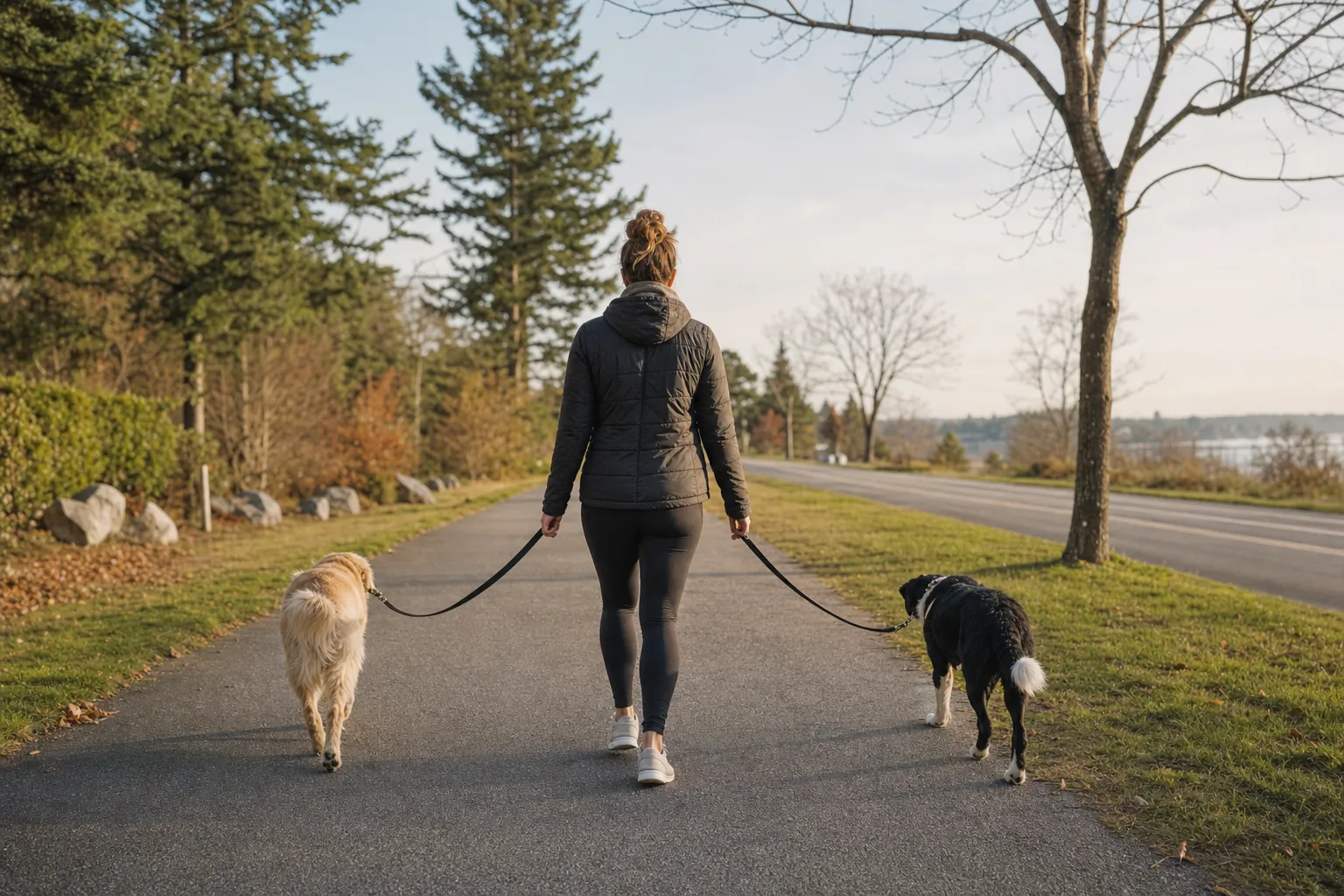
Walking two dogs can feel simple on a quiet block and chaotic the minute a squirrel, another dog, or a delivery truck enters the picture. A double dog leash can reduce the number of handles in your hands, but it does not magically make two dogs easier to manage. The useful choice is the one that gives both dogs room to move while keeping you able to respond calmly and quickly. This guide covers what to look for before you buy, how to match the setup to your dogs, and when two separate leashes are still the smarter call.
What a double dog leash actually does
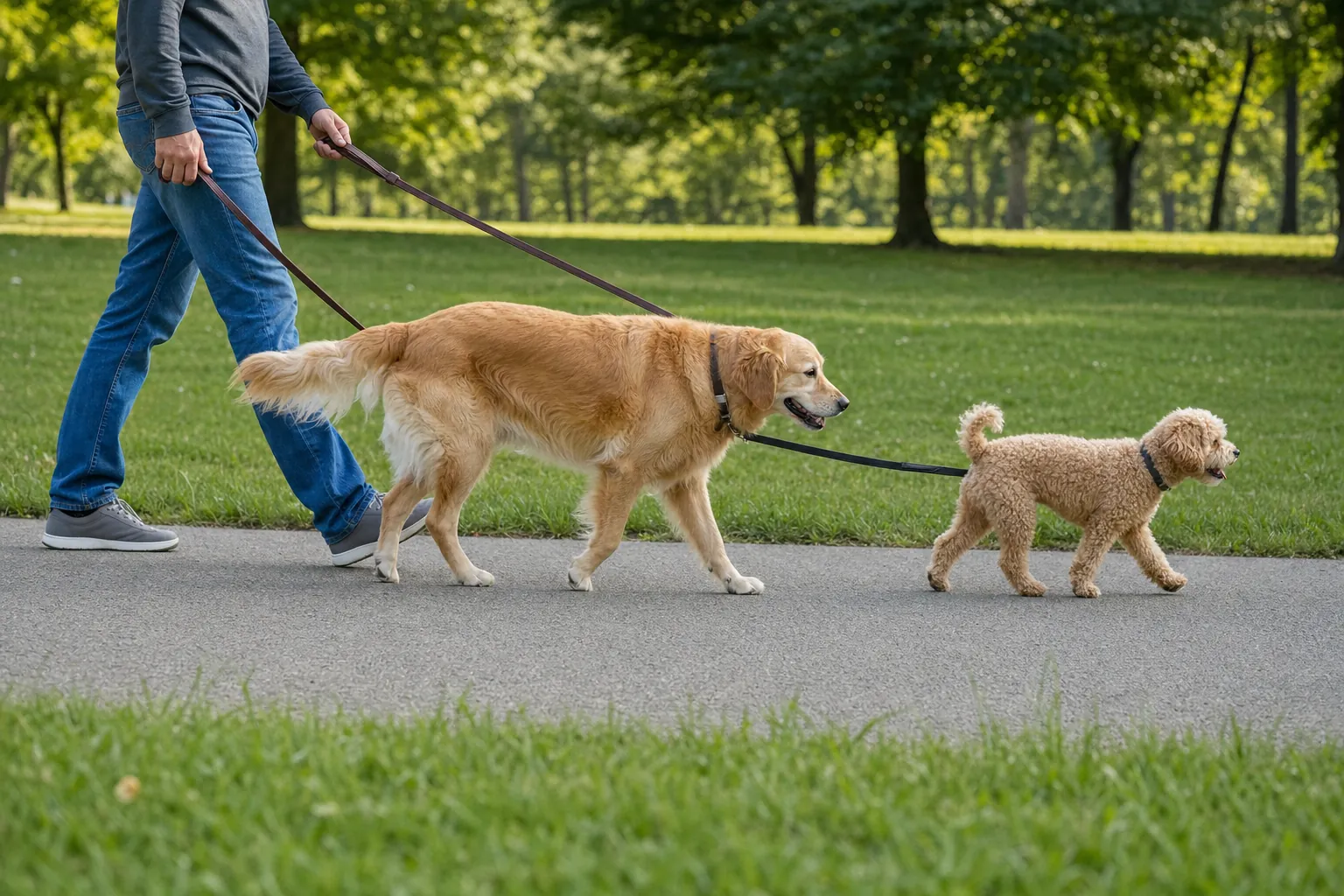
A double dog leash, often called a coupler or splitter leash, has one handle or main lead that divides into two attachment points. The idea is straightforward: one connection for the walker, one clip for each dog. Some versions use a fixed Y shape. Others add a swivel at the split to help the lines rotate independently. A retractable version may use two separate cords from one housing.
The best use case is not simply “two dogs live here.” It is two dogs that can already walk with reasonably similar pace, attention, and comfort around everyday distractions. A shared setup should make a known routine easier, not become the training plan for pulling, lunging, or fear. The Whole Dog Journal’s guidance on walking two dogs reaches the same practical conclusion: shared equipment works best when both dogs are already polite walkers and are reasonably matched in size.
Start with the dogs, not the hardware
Before comparing handles, clips, or colors, take an honest look at how the pair behaves on separate walks. Do they both keep a manageable pace? Can each dog move past another dog, person, bicycle, or tempting smell without pulling you off balance? Do they both respond to a pause, a turn, or a simple cue? Those questions matter more than whether a product says “no tangle.”
A large mismatch in weight, stride, or confidence is the biggest warning sign. A fast, powerful dog can pull a smaller or older companion off their chosen line. A nervous dog may need more space from a trigger than the other dog does. When either dog needs individual coaching, separate leashes give you two hands and two independent decisions. That is not a failure of the shared leash. It is simply the right tool for the moment.
It also helps to practice your loose-leash basics one dog at a time. The Animal Humane Society’s loose-leash routine begins with choosing a side, rewarding attention, and building the walk in small steps. When both dogs understand that forward motion happens on a relaxed line, joining them is far less likely to become a contest of direction.
Choose the leash style for your usual route
There is no universal “best” double dog leash because city sidewalks, open park paths, apartment hallways, and trailheads ask for different levels of control. A fixed coupler is often the simplest option for two dogs that stay at a similar pace. It keeps the setup easy to understand and gives you a familiar leash feel. Look for arms that are long enough for each dog to walk comfortably, without so much extra length that the pair can cross in front of you.
A swivel can be helpful for dogs that naturally change sides during a relaxed walk. It will not erase every tangle, but it can reduce the twisting that happens when two lines repeatedly cross. Watch how freely it turns and where it sits. Hardware that hangs too low can knock against a smaller dog or become another point to inspect before walks.
Retractable double leashes are more specialized. They can give dogs more exploring room in a quiet, open setting, but they ask you to manage braking, line length, and two dogs’ movement at once. The American Kennel Club notes that too much unspooled line can create hazards and advises against letting a dog run to the end of a retractable lead. That caution matters even more with two dogs, because one sudden change of direction can involve both lines. If either dog is still learning not to pull, a standard fixed-length leash is the calmer place to start.
For a fixed lead, length affects how much time you have to react. The AKC’s leash guide points beginners toward a 4 to 6 foot nylon leash for training. With two dogs, you do not need to copy that exact number, but you do want the same principle: enough space for a natural walking stride, with enough closeness to guide the pair before they reach a distraction.
Inspect the points that take the force
A double leash has more working parts than a standard lead, so the details deserve a closer look. Start at the handle. A comfortable, secure grip matters because your hand is managing the combined movement of two dogs. Padded handles can be pleasant on longer walks, but a grippy material and solid construction matter more than extra bulk.
Then check the main connection, split point, swivel, clips, and the webbing or cord near each clip. The hardware should close completely without sticking. Stitching should lie flat and dense, not look loose or frayed. On retractable versions, test the brake and lock while the leash is not attached to either dog. A brake that feels vague in your hand will not become clearer once two dogs are moving.
Do the same inspection with collars or harnesses. A shared leash cannot make a loose collar secure, and it should never be used to force a dog into a pace that makes them uncomfortable. If your dog has a health concern, a history of escape behavior, or strong pulling, ask your veterinarian or a qualified trainer which attachment setup is appropriate before changing gear.
Set the pair up before you leave the driveway
The first few shared walks should be short and boring on purpose. Pick a low-distraction route where you have room to turn around. Decide which dog will walk on which side, then keep that arrangement consistent while they learn the pattern. A repeatable side assignment reduces weaving and gives each dog a predictable place to return to after a sniff or pause.
Start with enough line slack for comfort, not enough slack for the dogs to cross directly in front of you. Keep your hands close to your body and avoid wrapping a leash around your wrist. If one dog speeds up, slow the whole group rather than letting the other dog get dragged along. If both lines grow tight, stop, reset the dogs’ positions, and move again only when the group is calm.
For routes with frequent greetings, traffic, tight corners, or busy entrances, consider taking separate leashes even after the pair has learned the basics. Control is situational. You may use a shared lead for the first calm stretch of a park loop and separate leads for a crowded sidewalk. The safest setup is the one that lets you make a clear decision before the situation gets complicated.
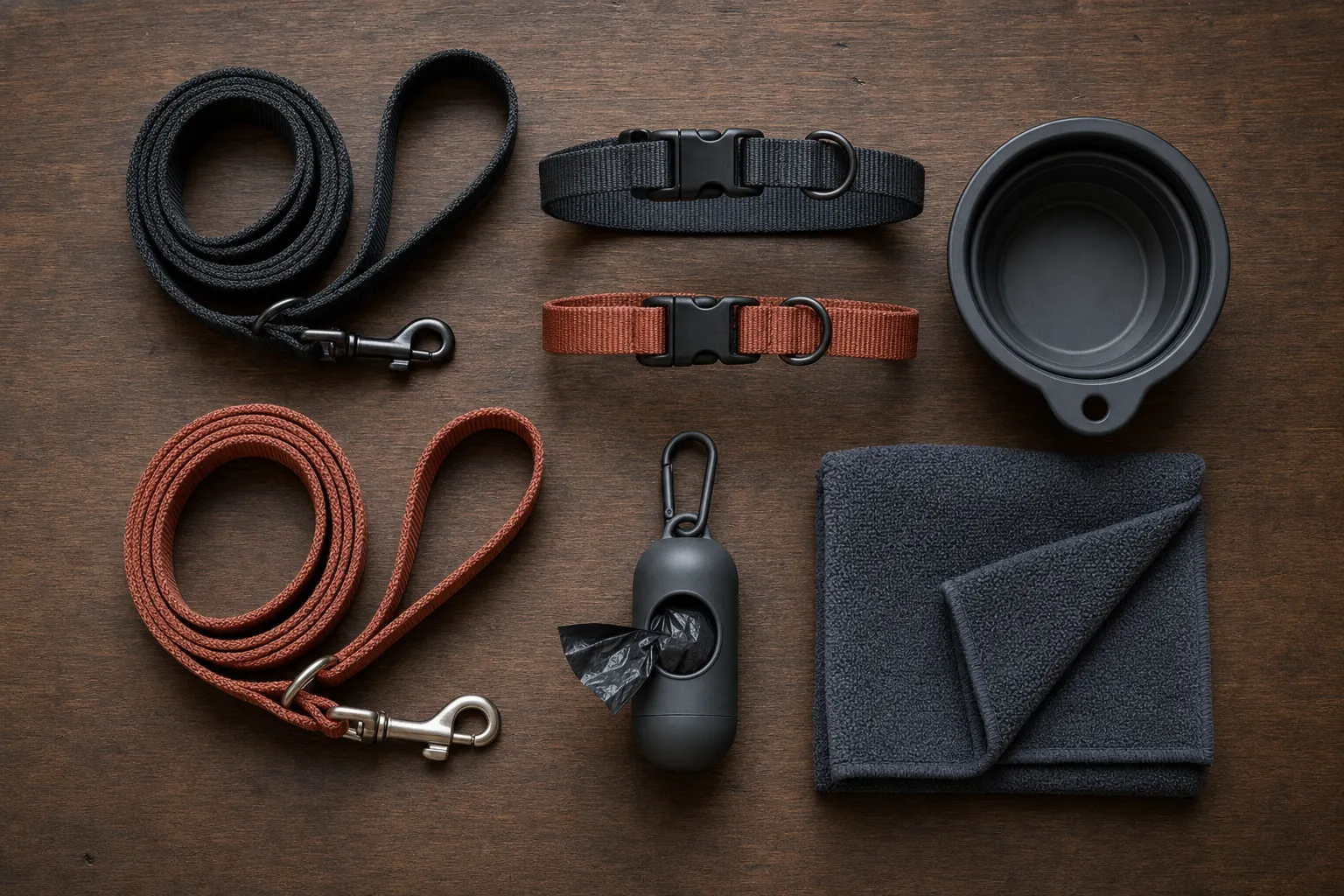
Bring the ordinary walk essentials, too. The ASPCA’s dog-care guidance recommends a leash and collar, identification, fresh water, and attention to hot pavement and heat stress on walks. Those basics become more important when you are supervising two dogs at once, because a small interruption can become two separate needs quickly.
A five-minute decision check before you buy
A product comparison gets much easier when you answer a few plain questions before looking at features. First, picture the most difficult part of your usual walk. Is it leaving an apartment building, passing another dog, crossing a street, managing two enthusiastic sniffers, or keeping the pair close near traffic? The hardest ordinary moment should decide the amount of control you need. A leash that feels comfortable only in an empty park may not suit the route you walk five days a week.
Next, compare the dogs as a pair. Similar height is helpful, but similar behavior is more important. Two dogs can be different sizes and still walk well together if both have an easy pace, respond when you stop, and do not surge toward distractions. On the other hand, two dogs of the same size can be a poor match for a coupler when one freezes near strangers and the other wants to greet everyone. Think about momentum, confidence, and the space each dog needs, not only the number on a scale.
Then consider your own handling. A double leash should leave you feeling less occupied, not more. You should be able to hold the setup securely, shorten the pair’s distance when needed, pick up after a dog, and make a calm turn without fumbling. If you normally walk with a coffee, stroller, child, or another task in hand, that is a strong reason to choose a simpler fixed arrangement or continue with two separate leashes. Convenience is only useful when it preserves attention.
Finally, build in a trial period. Use a new setup for ten quiet minutes, then evaluate it after the walk. Did the dogs stay on the sides you expected? Did the split twist? Were the clips easy to inspect and attach? Did you feel in control at the one moment that usually gets messy? Short, repeatable tests give you a better answer than a product description ever can. If the setup creates tension in your grip or confusion for either dog, return to separate walks while you adjust the routine.
Know when to skip a double dog leash
A shared leash is not a good fit for every pair or every day. Use separate leashes when one dog is recovering from illness or injury, when the dogs differ sharply in size or walking speed, or when either dog is reactive around people, dogs, or moving objects. Do the same when you are trying a new route, training a new cue, or walking near roads and crowded spaces where each dog may need independent guidance.
It is also reasonable to skip the shared setup when you are the only adult walking two dogs that together exceed what you can comfortably control. Good equipment supports good judgment. It should never ask you to gamble on balance, strength, or luck.
Finding a useful option for your routine
Once both dogs are ready for a shared setup, shop by how you walk, not by a claim on the packaging. Consider whether you need independent lines, a rotating split, a fixed length, or a brake you can operate confidently. For households that already have two companion dogs with similar walks, The Broken Phoenix carries an Automatic Double Dog Leash with two retractable lines. Review the current product details, then compare that design with your route, your dogs’ leash manners, and the level of control you prefer.
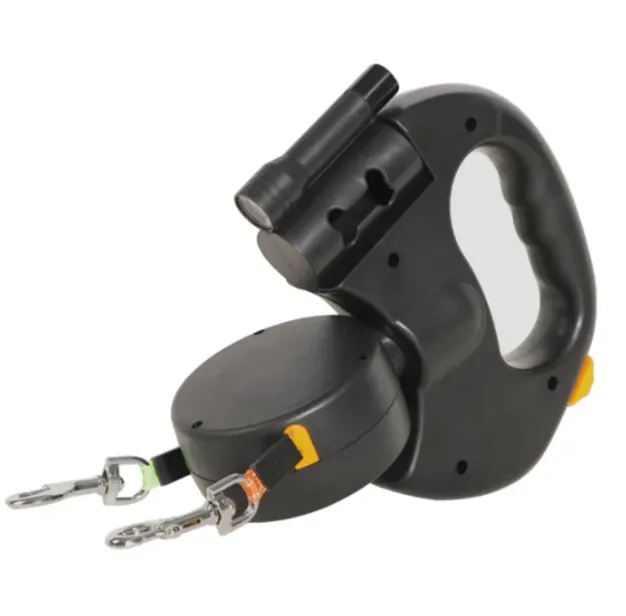
You can also browse the store’s pet supplies collection for other everyday dog-walking needs, or visit the full edit when you are comparing categories. Check the shipping policy and return policy before placing an order so the practical details are clear.
Frequently asked questions
Can a double dog leash work for dogs of different sizes?
It can, but it is easiest when both dogs have similar walking pace and leash manners. A large strength or speed mismatch can make the walk hard to manage, especially around distractions.
Should I use a double dog leash with puppies?
Start by teaching each puppy to walk calmly on their own. Once each dog can respond to simple cues and keep a comfortable pace, short practice walks together in a quiet area are a better next step.
What should I check before each walk?
Check that clips, stitching, rings, and handles are intact, then confirm each collar or harness fits securely. Bring identification, water for longer or warmer walks, and a plan for any route distractions.